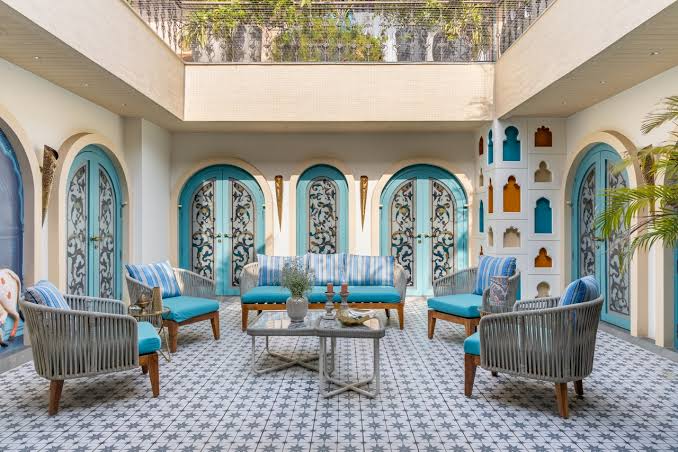
There is nothing else quite like a Mediterranean Revival home in Coral Gables.
The archways. The plaster walls. The terracotta tile underfoot that has absorbed decades of Florida light and still carries a warmth that no contemporary material has managed to replicate. These homes were designed with intention, built during one of the most ambitious planned development projects in American history, and they have aged into something that feels genuinely rare.
But living in one of these homes today presents a specific challenge.
The bones are extraordinary. The question is how to design an interior that honors what George Merrick built without turning the home into a museum, and without compromising the bones in the name of convenience. Getting that balance right is one of the most nuanced problems in period appropriate interior design in Coral Gables, FL, and it is one that requires a different kind of thinking than a standard renovation.
This guide covers the defining architectural elements of Coral Gables Mediterranean Revival homes, how each one should be approached in an interior renovation, and how to bring these historic spaces into alignment with the way people actually live today.
Understanding What George Merrick Built and Why It Matters
Before making any interior decisions in a Coral Gables historic home, it helps to understand the vision behind the architecture.
George Merrick founded Coral Gables in the 1920s with a deliberate aesthetic framework. He drew from Spanish colonial and Mediterranean precedents, commissioning architects who understood those traditions and requiring a consistency of style that gave the neighborhood its coherent character. The result was not a single style applied uniformly but a family of related approaches, all drawing from the same Mediterranean and Spanish colonial vocabulary.
George Merrick architecture interior elements were not decorative afterthoughts. They were structural commitments. The arched doorways, the coffered and beamed ceilings, the wrought iron details, the courtyard orientations, the thick plaster walls with their textured surfaces, all of these were integral to the architectural language and to the lifestyle the homes were built around.
Understanding this matters because it shapes how decisions should be made. These are not historic details that can be updated or substituted without consequence. They are the identity of the home. An interior that treats them as background is an interior that misses what makes these properties significant.
At the same time, 1920s home interior in Coral Gables, FL was not designed around contemporary kitchen layouts, modern bathroom expectations, or the technology that defines daily life today. The work of a skilled interior designer in Coral Gables, FL is to hold both realities at once.
Terracotta Tile: The Foundation That Should Never Be Replaced
If there is one material that defines the Mediterranean Revival interior in Coral Gables, it is terracotta tile.
Original terracotta floors in these homes carry a quality that new tile cannot reproduce. The variation in color across individual tiles, the way the surface has worn to a soft sheen in the most-trafficked areas, the warmth that the material holds even in a cool room. These are the marks of age, and they add to the tile’s value rather than diminishing it.
The most common mistake in Coral Gables historic home renovation involving original terracotta is replacement. Homeowners who find the original tile worn or stained sometimes conclude that new tile would be an improvement. In almost every case, restoration is the better choice. Original terracotta can be cleaned, resealed, and in some cases re-laid where individual tiles have cracked or loosened. The investment in restoration preserves something irreplaceable.
Where new terracotta tile is genuinely necessary, sourcing handmade or reclaimed tile rather than machine-made contemporary versions maintains the visual integrity of the floor. The variation that comes with handmade production is not a flaw. It is what makes the material feel alive.
Terracotta and wrought iron design in these homes also presents a specific pairing opportunity. The warm, earthy tones of terracotta grounds a room and calls for metalwork that has similar character, aged bronze or hand-forged iron rather than polished modern finishes that sit in visual conflict with the historic floor.
Plaster Walls: Texture That Modern Finishes Cannot Replicate
Original plaster walls in Coral Gables Mediterranean Revival homes are among their most distinctive and most frequently compromised features.
The texture of historic lime plaster is not something that can be approximated with drywall and a skim coat. It has depth, variation, and a quality of light absorption that makes a room feel warm even without direct sunlight. It also has acoustic properties that reduce the hollow quality common in contemporary construction.
In a Coral Gables historic home renovation, preserving original plaster walls where structurally sound is always preferable to replacement. Where damage has occurred, working with a plasterer who understands traditional lime plaster techniques allows for repairs that maintain the character of the original surface.
When plaster walls are painted, the finish matters significantly. Flat or matte finishes work with the texture of the plaster rather than flattening it. High sheen finishes catch the light in ways that reveal the imperfections that give historic plaster its character, and not in a flattering way.
Color selection on plaster walls in these homes should respond to the warmth of the material. Whites that read cold or blue in contemporary construction feel particularly stark against original plaster. Warm whites, soft ochres, aged creams, and the earthy tones that reference the Spanish colonial and Mediterranean palette all work with the material rather than against it.
Archways and Openings: The Structural Language of Mediterranean Revival
The arched opening is one of the most defining features of Spanish colonial interior in Miami, FL, and in the Coral Gables homes that draw from that tradition.
These openings do more than connect rooms. They define the pace of movement through a home. Passing through an archway is a different experience than passing through a rectangular doorway. The form slows movement in a specific way, creating a moment of transition that gives each room its own contained identity.
In period appropriate interior design in Coral Gables, FL, archways should be treated as the focal points they were designed to be. Furniture arrangements that force the eye toward an arch rather than away from it. Lighting that highlights the form of the opening. Materials in adjacent rooms that are distinct enough to signal the transition without breaking the overall coherence of the home.
What archways should not be subjected to is modification in the name of convenience. Widening or squaring off an original arch to accommodate contemporary furniture or traffic flow eliminates something that cannot be recreated without significant cost and architectural complexity. When furniture does not fit through an original arch, the solution is finding furniture that does, not altering the arch.
Where historic archways have been previously modified, restoration to the original form is almost always worth pursuing. An interior designer in Coral Gables, FL with experience in historic district interior renovation can advise on both the architectural and aesthetic approach.
Coffered and Beamed Ceilings: Vertical Presence That Shapes Every Room
The ceiling in a Mediterranean Revival home is not neutral space.
Original coffered ceilings and exposed wood beam ceilings in Coral Gables homes define the scale and character of a room in ways that affect every design decision below them. They bring the ceiling into the visual composition of the room, which changes how furniture scale, lighting placement, and color choices should be approached.
Antique woods used in original beamed ceilings in these homes have a color and grain quality that aged wood develops over decades. Where beams are original, maintaining or gently restoring their natural finish is nearly always preferable to painting or staining them to match a contemporary palette. Paint on original wood beams is both visually and materially irreversible in a practical sense, as paint penetrates the surface of the wood over time and becomes very difficult to remove without damage.
Lighting in rooms with coffered or beamed ceilings requires specific consideration. Recessed lighting grids that read clearly from below work against the architectural character of these ceilings. Pendant lighting hung from the beams, wall sconces that bring light up to the ceiling surface, or chandeliers scaled to the room and ceiling height all serve the architecture rather than competing with it.
Furniture scale matters more in rooms with significant ceiling height. Pieces that are low-profile or modest in scale can feel lost beneath a beamed ceiling that demands presence from the space below. This is one of the areas where the design logic of contemporary minimalism can work against the character of a historic Coral Gables interior.
Wrought Iron: A Material That Should Appear Throughout
In the Spanish colonial and Mediterranean Revival tradition, wrought iron is not an accent. It is a structural and decorative element that appears consistently throughout the interior and exterior of the home.
Railings, door hardware, light fixtures, furniture frames, grilles on windows, and decorative panels were all executed in hand-forged iron in the original construction of Coral Gables homes. The quality of hand-forged ironwork is visible in the slight variations in form, the surface texture that comes from the forge, and the way the metal takes on a dark, rich patina over time.
Terracotta and wrought iron design in these homes creates one of the most coherent visual relationships in historic interior design. The earthy warmth of the tile and the dark solidity of the iron balance each other in a way that feels native to the architectural tradition.
In contemporary renovations of these homes, wrought iron should remain present rather than being substituted with brushed nickel, chrome, or other modern hardware finishes that have no relationship to the period. Where original ironwork remains, restoration and maintenance is preferable to replacement. Where new hardware or fixtures are needed, sourcing from artisans working in traditional hand-forged techniques maintains the material consistency that gives these interiors their coherence.
Balancing Period Authenticity With Modern Living
This is where the real design work happens in a Coral Gables historic home renovation.
The goal is not historical re-creation. No one should feel as though they are living in a museum or sacrificing genuine comfort to preserve architectural integrity. The goal is a home that honors its period character while functioning fully for the life being lived in it today.
That balance looks different in every home and for every family. But there are consistent principles that guide it.
The first is distinguishing between what is irreplaceable and what is adaptable. Original terracotta floors, plaster walls, archways, coffered ceilings, and hand-forged ironwork are irreplaceable. They should be preserved and restored wherever possible. Contemporary kitchen appliances, bathroom fixtures, technology integration, and climate control systems are adaptable. They can be incorporated in ways that serve modern needs without compromising the historic character of the home.
The second is making modern additions in materials and forms that are honest about being contemporary without conflicting with the period architecture. A kitchen that acknowledges its historic context through material choices, warm woods, unfussy hardware, surfaces with texture rather than high gloss, without pretending to be a period kitchen, tends to coexist more gracefully with the original architecture than one that either mimics the period awkwardly or ignores it entirely.
The third is understanding that restraint is often the most powerful tool in a historic interior. These homes do not need to be filled to feel complete. The architecture carries the room. Furniture and objects that are chosen with care and given space to exist within the architectural composition tend to feel more resolved than interiors where every surface and corner is addressed.
The Role of an Interior Designer in a Historic Coral Gables Home
Period appropriate interior design in Coral Gables, FL requires a specific set of skills and knowledge that goes beyond general interior design practice.
Working in the historic district means understanding the local preservation guidelines that govern what can and cannot be altered. It means knowing which craftspeople and restoration specialists are equipped to work on historic plaster, original ironwork, and antique wood. It means having a design sensibility that is comfortable holding the tension between historical integrity and contemporary function.
An interior designer in Coral Gables, FL with direct experience in historic district interior renovation brings all of this to a project. They understand George Merrick architecture interior details not as abstract references but as living elements that they have worked with in real projects. They know what restoration looks like when it is done well and what it looks like when corners have been cut. They can anticipate the complications that historic homes present before they become expensive surprises.
That experience is not a luxury in this context. It is what protects the investment, both in the financial value of a historic Coral Gables property and in the daily experience of living in one.
Design a Home That Honors What Was Built
A Mediterranean Revival home in Coral Gables is one of the most distinctive residential properties in South Florida.
Its value, architectural, cultural, and financial, comes directly from the integrity of what George Merrick and his architects built. An interior that honors that integrity while making the home genuinely livable for the people inside it is the highest possible outcome of a historic home renovation.
At Mi Casa Interiors, historic Coral Gables projects begin with a full understanding of the home’s architectural period, its specific elements, and what preservation and restoration require before any design direction is proposed. Every decision is made to serve both the architecture and the life being lived within it.
Book your Coral Gables historic home design consult with Mi Casa Interiors and get a direction built around what makes your home worth preserving.
FAQs
What is Mediterranean Revival interior design? Mediterranean Revival is an architectural and interior design style that draws from Spanish colonial, Italian, and Moorish precedents. In Coral Gables, it is defined by terracotta tile, plaster walls, arched openings, coffered and beamed ceilings, wrought iron details, and courtyard-oriented layouts, all built with a level of craftsmanship that reflects the original vision of George Merrick’s development.
How do I renovate a Coral Gables historic home without losing its character? The key is distinguishing between what is period-original and irreplaceable, floors, plaster, archways, ceilings, ironwork, and what can be modernized without compromising the home’s identity. Original elements should be preserved and restored wherever possible. Modern additions should be made in materials and forms that coexist honestly with the period architecture.
Can I update the kitchen and bathrooms in a historic Coral Gables home? Yes. Kitchens and bathrooms can be updated for contemporary function while respecting the character of the home through material choices, hardware selection, and design restraint. An experienced designer can advise on approaches that satisfy both modern needs and historic district guidelines.
What makes terracotta tile in a Coral Gables home worth preserving? Original terracotta floors carry a quality developed over decades that new tile cannot replicate. The surface variation, worn patina, and material warmth are marks of age that add value. Restoration is almost always preferable to replacement, and reclaimed or handmade tile is the appropriate choice where new tile is genuinely necessary.
Do I need a designer experienced in historic homes for a Coral Gables renovation? Yes. Historic district interior renovation involves preservation guidelines, specialized craftspeople, and design decisions that require specific knowledge of the period and the local regulatory environment. A designer with direct experience in Coral Gables historic homes can navigate all of these and protect the integrity of the property throughout the project.
What colors work best in a Mediterranean Revival interior? Warm whites, aged creams, soft ochres, terracotta tones, earthy greens, and the muted, sun-warmed palette of the Spanish colonial and Mediterranean tradition all work with the materials and light conditions of these homes. Cool neutrals and stark whites tend to conflict with the warmth of original plaster, terracotta, and antique wood.