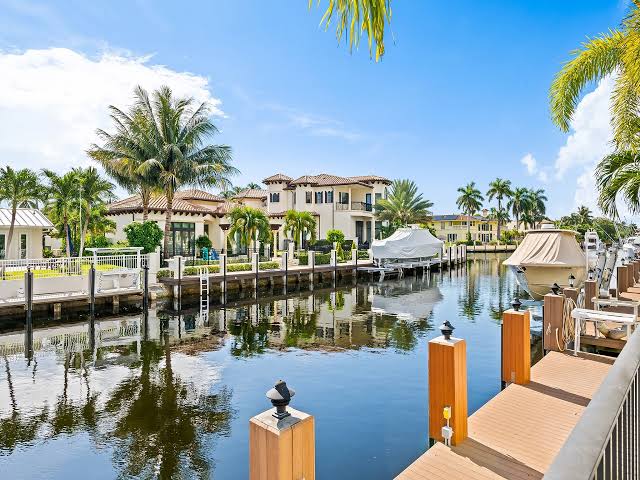
A waterfront home on Biscayne Bay is one of the most extraordinary places to live in South Florida.
The view alone justifies everything. The way the light moves across the water at different hours. The particular quality of the air in the morning when the bay is still. The sense that the boundary between your home and something much larger and more alive than any room has been made genuinely thin.
But a bayfront home in Coconut Grove also asks more of its interior than almost any other residential property. The salt air that makes the setting so distinctive is actively corrosive to a wide range of materials. The humidity that comes with waterfront proximity affects art, antiques, and finishes in ways that are not always visible until the damage is done. The impact glass required for hurricane protection changes the quality of light in ways that require a design response. And the view, the defining feature of the entire property, can be undermined by interior decisions that compete with it rather than frame it.
Getting all of this right simultaneously is not a matter of following general coastal design advice. It requires specific knowledge of how waterfront conditions behave in this particular environment and how to design an interior that holds up beautifully over time while letting the bay remain the most important thing in the room.
This is what experienced Coconut Grove, FL interior designers bring to bayfront home projects, and this guide covers every layer of it.
Why Waterfront Homes Require a Different Design Standard
Not all coastal homes face the same conditions, and Coconut Grove bayfront properties sit in a particularly demanding environment.
Biscayne Bay home design contends with salt air that is present year-round, not seasonally. The salt content in the air near the waterfront accelerates the deterioration of metals, degrades certain fabrics, and affects finishes in ways that are not immediately visible. A material that performs well five miles inland may show significant wear within a year or two at a bayfront property.
Humidity levels at waterfront homes are also consistently higher than those further from the water. This matters not just for comfort but for the preservation of anything inside the home that is sensitive to moisture, including wood furniture, antiques, art on paper, leather, and certain textiles.
The combination of salt air, high humidity, and intense South Florida sun creates conditions that require every material and finish choice to be evaluated against a higher durability standard. This is not about sacrificing beauty. It is about choosing materials that maintain their beauty over time in conditions that will test them constantly.
Waterfront home interior design in Miami, FL that does not account for these conditions looks compromised within a few years, even when the original investment was significant. Design that accounts for them from the start holds its quality across a decade of waterfront living.
Salt Air and What It Does to Interior Materials
Salt air is the most significant and most underestimated challenge in bayfront home interior design in Coconut Grove, FL.
The salt particles carried in the air near open water are mildly corrosive and accumulate on surfaces over time. Their effect is gradual and not always visible in the early months of a project, which is why homeowners sometimes discover the damage well after material choices have been made and installed.
Metals that degrade fastest in salt air environments
Standard steel hardware oxidizes quickly in salt air, developing rust that is not merely cosmetic but structurally compromising over time. Brass that is not properly sealed or lacquered will tarnish unevenly and accelerate in a marine environment. Nickel and chrome finishes on fixtures and hardware show pitting and discoloration faster near the water than in non-coastal interiors.
What designers specify instead: marine grade interior finishes are the appropriate standard for bayfront homes. Solid brass with a protective lacquer coating, stainless steel rated for marine environments, powder-coated metals with marine-grade coatings, and unlacquered bronze that is allowed to develop a natural patina rather than fighting deterioration. These materials are specified in boat building and coastal commercial construction for the same reasons they belong in bayfront residential interiors.
Fabrics that fail near salt water
Certain natural and synthetic fabrics absorb salt particles from the air and retain moisture, which accelerates mildew and deterioration. Standard upholstery fabrics, even high-quality ones, are not designed for the salt air exposure of a waterfront property and will show wear significantly faster than their rated lifespan in that environment.
What designers specify instead: solution-dyed acrylic fabrics, originally developed for marine and outdoor applications, resist salt air, UV exposure, and moisture while providing the texture and color range needed for interior upholstery. Performance fabrics with closed-fiber construction prevent salt particles from embedding in the weave. These are not compromise materials. In a salt air environment, they are the correct materials.
Finishes on wood and cabinetry
Standard furniture lacquers and wood finishes are not formulated for continuous salt air exposure. They can cloud, crack, or delaminate over time in waterfront conditions. Wood that is not properly sealed and maintained will absorb moisture from the marine air and show the effects through warping, swelling, or finish failure.
What designers specify instead: catalyzed lacquers and conversion varnishes that create a harder, more moisture-resistant film. Teak and other naturally oil-rich woods that are inherently more resistant to marine conditions. Marine-grade finishes on cabinetry in rooms closest to the water. Regular maintenance schedules that treat salt air exposure as a design condition, not an afterthought.
Humidity Management for Art and Antiques
A bayfront home in Coconut Grove with significant art or antiques requires humidity management as a design consideration, not just an HVAC one.
Works on paper, including drawings, prints, watercolors, and photographs, are among the most humidity-sensitive objects in any collection. At consistently elevated humidity levels, paper expands and contracts with moisture changes, eventually leading to cockling, foxing, and in severe cases mold. At very low humidity, paper becomes brittle. The ideal relative humidity for paper-based works is typically between 45 and 55 percent, a range that requires active management in a waterfront environment where ambient humidity is frequently higher.
Oil paintings on canvas are more tolerant of humidity variation than works on paper but are not immune. Canvas expands and contracts with moisture changes, which over time can lead to paint layer instability and cracking. Antique frames, particularly those with gilding, are vulnerable to salt air and humidity in ways that are not always reversible.
Antique furniture in a bayfront home faces similar pressures. Joints in antique pieces were typically assembled with hide glue, which is water-soluble and will loosen over time in a high-humidity environment. Veneers lift. Marquetry opens. Surfaces that have been stable for a century in a drier environment can show significant changes within a few years of waterfront exposure.
Coastal interior design in Miami, FL for homes with significant collections requires collaboration between the interior designer and a climate consultant or conservator. Placement of works away from exterior walls and windows where humidity and temperature fluctuate most significantly. Dedicated climate control zones where humidity is actively managed. Display cases with controlled microenvironments for the most sensitive objects. UV-filtering glass on all framed works, which serves double duty against the intense South Florida light.
These are not excessive precautions. They are the appropriate standard of care for objects of value in a marine environment.
View Maximization: Designing Around the Bay
The bay view is the defining feature of a Coconut Grove waterfront home. Every interior decision should be made with that view in mind.
This sounds obvious, but view maximization interior design is more specific and more demanding than simply pointing furniture toward the water. It is about managing sightlines, controlling what the eye encounters before it reaches the view, and making design choices throughout the room that frame the water rather than compete with it.
Furniture placement and sightline planning
The first principle of sightline planning in a bayfront home is identifying the primary viewing positions and working backward from them. Where does someone sit when they want to see the water? Where do they stand when they first enter the room? What is visible from the dining table, the kitchen, the bedroom?
Once those positions are established, furniture placement should be evaluated from each of them. A sofa that blocks the sightline from the entry to the water undermines the arrival experience of the room. A dining table positioned so that seated guests face a wall rather than the view misses an obvious opportunity. A bed angled to allow a reclining occupant to see the bay through impact glass doors creates a morning experience that justifies every other design decision in the room.
The goal is not to fill the room with furniture that all points at the water in an obvious way. It is to arrange the room so that movement through it consistently rewards the occupant with the view at the right moments.
Color choices that frame rather than compete
Color in a bayfront room should serve the view, not assert itself against it. The blues and greens of Biscayne Bay are already present in the room through every window. Introducing strong competing colors in the interior creates visual tension that makes the room feel unsettled.
Coastal interior design in Miami, FL for rooms with active bay views tends toward palettes that recede gracefully. Warm whites, soft greiges, sandy neutrals, and earthy tones that reference the land and sky rather than the water itself. These choices allow the view to remain the dominant color experience in the room while the interior provides warmth and depth without competition.
This does not mean the palette must be timid. Textural depth, material variation, and carefully placed accent tones can give a room significant presence without ever challenging the bay for visual dominance.
What to keep away from the windows
Window treatments in a bayfront home require particular restraint. Heavy drapes, busy patterns, or treatments that cover significant portions of the glass undermine the view and reduce the natural light that makes these rooms so distinctive during the day.
Where privacy or light control is needed, the appropriate response is sheer layering that filters without blocking, automated shades that retreat fully when not in use, or exterior solutions that address sun angle without compromising the interior view. The window is not a wall to be dressed. It is the most important feature in the room.
How Impact Glass Changes Light and What Designers Do About It
Hurricane impact glass is a requirement, not a choice, for bayfront homes in South Florida. It is also one of the most significant and least discussed factors in how these homes look and feel inside.
Impact glass is substantially thicker than standard residential glazing and typically incorporates a laminated interlayer that gives it its structural resilience. This combination affects light transmission in two specific ways that matter to interior design.
First, impact glass reduces the total amount of visible light that passes through the window. The reduction is not dramatic, but it is perceptible, particularly in rooms that depend on natural light for their atmosphere. A room that looked bright and airy in the developer’s rendering, based on standard glass performance, may feel noticeably different once impact glass is installed.
Second, and more significantly for color work, impact glass has a slight green or blue tint depending on the specific product. This tint affects how colors are read in the room. Whites can shift toward cool or slightly green tones. Paint colors selected under standard light conditions may look different once impact glass is the source of all natural light in the room.
Hurricane impact window interior design accounts for both of these effects. Paint colors should be evaluated under the actual light conditions of the finished space, not in a showroom or against a paint chip held near a standard window. Warm-toned artificial lighting compensates for the color shift introduced by impact glass, which tends to pull cool. Layered lighting that supplements natural light during peak hours maintains the brightness that waterfront rooms are designed around.
Designers working regularly in bayfront homes in Coconut Grove understand this dynamic from direct experience. They know which paint colors hold their warmth under impact glass light conditions, which artificial light sources complement rather than conflict with the glass tint, and how to specify a lighting plan that keeps the room feeling as alive at midday as it does at golden hour.
Outdoor-Rated Materials for Transitional Spaces
The threshold between inside and outside in a bayfront Coconut Grove home is not a line. It is a zone.
Covered terraces, loggia spaces, screened outdoor rooms, and the areas immediately adjacent to large sliding or folding glass doors all exist in a condition that is neither fully interior nor fully exterior. They receive the salt air, the humidity, and the UV exposure of the outdoors while functioning as living and dining spaces that require the comfort and refinement of interior design.
Furnishing these transitional spaces with standard interior furniture is one of the most common and most costly mistakes in bayfront home interior design in Coconut Grove, FL. Standard upholstery fabrics mildew. Wood frames that are not rated for exterior exposure warp and crack. Metal frames rust. The replacement cycle in these spaces becomes expensive quickly.
The appropriate specification for transitional spaces combines outdoor-rated structural materials with interior-quality aesthetics. Teak, ipe, and aluminum frames with marine-grade powder coating. Solution-dyed acrylic upholstery with performance foam cores that resist moisture retention. Outdoor-rated rugs woven from synthetic fibers that mimic natural textures without absorbing moisture or degrading in UV exposure.
The range of outdoor-rated furniture that meets these material standards while achieving a genuinely refined aesthetic has expanded significantly. The distinction between outdoor furniture and interior furniture has become much less visible in well-specified transitional spaces. A Coconut Grove, FL interior designer who works regularly with bayfront properties knows this product landscape and can specify transitional spaces that are indistinguishable in quality and appearance from fully interior rooms.
Protecting the Investment Over Time
A bayfront home in Coconut Grove represents a significant financial and personal investment. The design decisions made at the outset of a project determine how well that investment holds up over the years that follow.
Materials specified without regard for salt air, humidity, and UV exposure will show their age within a few years. Art and antiques placed without climate consideration can sustain damage that is expensive or impossible to reverse. Views that are not actively designed around become background rather than the defining experience of the home. Transitional spaces furnished with the wrong materials require replacement on a cycle that adds ongoing cost to the ownership of the property.
Getting these decisions right the first time is not just an aesthetic matter. It is a practical one.
A Coconut Grove, FL interior designer with direct experience in Biscayne Bay home design brings the specific knowledge that these decisions require. Not general coastal design advice, but informed material specification, climate-aware placement, sightline-driven layout, and a long-term view of how every choice will perform in a genuine waterfront environment.
Design a Bayfront Home That Holds Its Quality
The bay view will not change. The question is whether the interior around it is designed to last.
At Mi Casa Interiors, waterfront projects begin with a full understanding of the specific conditions of the property, its orientation, its salt air exposure, its light conditions, and the way the people inside it want to live. Every material choice, furniture specification, and layout decision is made with both immediate beauty and long-term performance in mind.
Book your Coconut Grove waterfront design consult with Mi Casa Interiors and get a direction built for what bayfront living actually requires.
FAQs
What materials hold up best in a salt air waterfront home? Marine-grade metals such as powder-coated aluminum, lacquered brass, and marine-rated stainless steel perform best for hardware and fixtures. Solution-dyed acrylic fabrics resist salt air and UV exposure for upholstery. Catalyzed lacquers and oil-rich woods such as teak are appropriate for cabinetry and furniture in salt air environments.
How does impact glass affect the interior of a bayfront home? Impact glass reduces light transmission slightly and introduces a subtle color tint, typically blue or green, that affects how paint colors and finishes read in the room. Designers compensate with warm-toned artificial lighting, paint colors evaluated under actual impact glass conditions, and layered lighting plans that maintain brightness throughout the day.
How should I protect art and antiques in a waterfront home? Humidity management is the priority. Works on paper require relative humidity maintained between 45 and 55 percent. Placement away from exterior walls and direct window light reduces exposure. UV-filtering glass on all framed works protects against fading. For significant collections, a conservator should be consulted alongside the interior designer.
What is the difference between outdoor-rated and standard interior furniture for transitional spaces? Outdoor-rated furniture uses structural materials and finishes designed to withstand salt air, humidity, and UV exposure without deteriorating. Standard interior furniture placed in covered outdoor or transitional spaces will mildew, warp, and rust on an accelerated timeline in a waterfront environment.
How do I maximize a bay view through interior design? Sightline planning from primary seating, sleeping, and entry positions determines furniture placement. Color palettes that recede rather than compete with the water allow the view to remain dominant. Window treatments that retreat fully when not in use preserve the view at all hours. Furniture scale and arrangement should consistently reward movement through the room with the view at the right moments.
Why does hiring a local Coconut Grove interior designer matter for a waterfront project? Local designers with direct bayfront experience understand how salt air, impact glass light, and Biscayne Bay’s specific humidity conditions behave in practice. That knowledge shapes material specifications, lighting plans, and design decisions that hold up over years of waterfront living in ways that general coastal design advice cannot reliably predict.